
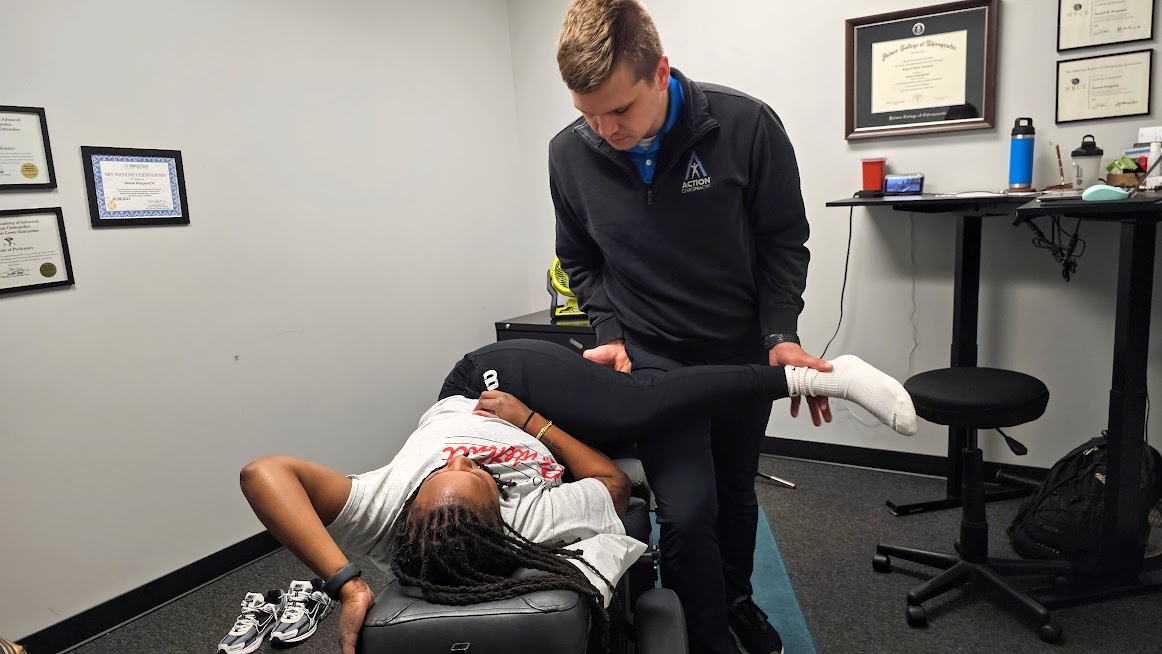
Ehlers-Danlos and Chiropractic Care: A Gentle, Supportive Approach
Living with Ehlers-Danlos Syndrome (EDS) means navigating a body that doesn’t always play by the rules. Ehlers-Danlos Syndrome is a group of inherited disorders that affect your body’s connective tissue. Collagen – the structural “glue” holding your joints and organs together- doesn’t work properly.
This leads to hypermobile joints, fragile tissues, and chronic, often debilitating pain. For many EDS patients, finding the right care feels like solving a puzzle with missing pieces.
And honestly? That gets exhausting fast.
Here is where things get interesting, though. A growing number of people with EDS are turning to chiropractic care, but not for aggressive spinal cracking. They are looking for a more careful, stability-focused approach that supports joint function and improves controlled movement.
Chiropractic treatment for EDS appears to be a set of gentle, targeted approaches that work with their hypermobile bodies. Done right, it’s a carefully modified approach built around the unique demands of connective tissue disorders.
Are you unsure if chiropractic care for EDS is even safe for a body as complex as yours?
YES, it is! This blog has uncovered the truth by answering every question you might have. We have addressed how EDS affects the musculoskeletal system, which chiropractic techniques are safe, what to expect from treatment, and how proper care supports stability.
Let’s dive into clear, research-backed information so EDS patients like you can make informed decisions about their care.What Is Ehlers-Danlos Syndrome (EDS)?
Ehlers-Danlos Syndrome, or EDS for short, is not a single condition. It’s actually a group of 13 distinct genetic disorders, including:
- Classic
- Classical-like
- Cardiac-valvular
- Vascular
- Hypermobile
- Arthrochalasia
- Dermatosparaxis
- Kyphoscoliotic
- Brittle cornea syndrome
- Spondylodysplastic
- Musculocontractural
- Myopathic
- Periodontal EDS
Each type affects connective tissue differently, but they all trace back to one root problem: faulty collagen.
Collagen is the protein that gives structure to your joints, skin, tendons, and blood vessels. When collagen doesn’t form correctly, the entire framework of your body becomes unstable.
Of these 13 types, the most common is hypermobile EDS (hEDS). It accounts for the majority of diagnoses and features joints that move far beyond their normal range. Although it sounds harmless, in reality, it means daily dislocations, sprains, and pain that most people can’t see or understand.
EDS affects an estimated 1 in 5,000 people globally. Many of them go undiagnosed for years, while some consider their pain to be psychological. Others are handed generic advice that doesn’t account for how differently their bodies work.
So if you’ve spent years searching for answers, let us tell you that’s not weakness. It’s a system that wasn’t built to quickly recognize EDS. Understanding what’s actually happening inside your body is the first real step toward finding care that works.How Does EDS Affect the Musculoskeletal System?
EDS doesn’t just affect joint flexibility by causing loose joints. To be specific, it creates a chain reaction throughout the entire musculoskeletal system.
Take a look at how it affects your musculoskeletal system in the points below:1. Joint Instability Becomes the New Normal
Faulty collagen means joints don’t stay in place. Shoulders, knees, hips, and even small finger joints can partially or fully dislocate during ordinary activities.
As a result, reaching for a cup, turning a doorknob, or sleeping in the wrong position can trigger a subluxation. Such instability is constant, unpredictable, and genuinely exhausting to manage.2. Muscles Work Overtime to Compensate
When joints can’t stabilize themselves, muscles step in. They tighten, brace, and guard around unstable areas to prevent injury. Going forward, this creates chronic muscle tension and trigger points that feel impossible to release.
The muscles are not the problem – they are just doing someone else’s job.3. The Spine Takes a Significant Hit
The spine is particularly vulnerable in EDS patients. Cervical instability, meaning instability in the neck region, is especially common. You may also experience issues with the craniocervical junction, where the skull meets the spine.
Spinal hypermobility can compress nerves, cause headaches, and create radiating pain difficult to trace back to its source.4. Proprioception Gets Disrupted
Proprioception is the ability of your body to sense its movement, position, and spatial orientation without depending on vision. In EDS, this system doesn’t function reliably because your body struggles to accurately detect joint position.
That leads to poor coordination, frequent missteps, and a higher risk of falls and re-injury. It also explains why EDS patients often feel clumsy, since it’s a neurological condition.5. Chronic Pain Becomes Deeply Ingrained
Well, pain in EDS is rarely straightforward. It’s not just joint pain or muscle soreness. Over time, your nervous system becomes sensitized to the pain signals.
While rest doesn’t always bring relief, small movements trigger big responses. It’s known as central sensitization and is one reason chiropractors who care for patients with Ehlers-Danlos Syndrome must go far beyond standard adjustment protocols.How Chiropractic Care Can Help EDS Patients?
People often assume chiropractic care is only about cracking backs and realigning spines. For EDS, the reality looks quite different. The goal is to build a foundation of stability, reduce pain, and help the body function more predictably every day.
Ehlers-Danlos syndrome and chiropractic care work best together when the approach is grounded in what your EDS body actually needs. Neither generic protocols nor cookie-cutter treatment plans can be effective.
A genuinely informed chiropractor looks at your full picture, including your pain patterns, instability, and nervous system responses. Then, he builds a care plan around these aspects.
The benefits are real and worth understanding in detail.
Here is what thoughtful and targeted chiropractic treatment can actually do for your body:Reduces chronic muscle tension
Improves joint proprioception
Manages pain without medication dependency
Supports spinal alignment without force
Addresses the whole body, not just one area
Is Chiropractic Care Safe for People with EDS?
The short answer is: yes, chiropractic care can be safe for EDS patients. But the safety depends almost entirely on the chiropractor’s knowledge of hypermobility conditions. Moreover, their willingness to adapt their approach is significant.
Expert chiropractors don’t recommend Standard high-velocity spinal manipulation, which produces a loud “crack,” for EDS patients. Hypermobile joints don’t need more range of motion. Rather, they need stability, support, and controlled movement.
A well-trained chiropractor working with EDS patients like you will typically:
- Avoid forceful thrusting techniques on your unstable joints.
- Use low-force, instrument-assisted, or soft tissue methods instead.
- Assess joint stability before attempting any spinal work.
- Modify treatment based on your response at each visit.
- Communicate openly about what’s working and what needs adjustment.
So what about Ehlers-Danlos neck cracking specifically? It’s a real concern to be precise. The cervical spine is often the most unstable region for EDS patients. Hence, aggressive neck manipulation carries genuine risk.
An experienced chiropractor will recognize this and approach the neck with significantly more caution. The overall objective is to avoid rotational manipulation entirely in favor of gentler mobilization techniques.
The risk isn’t chiropractic itself but implementing the approaches without EDS awareness. That distinction matters enormously for your safety and your outcomes.What Are Some EDS-Friendly Chiropractic Techniques?
Not every chiropractic technique belongs in an EDS treatment plan. The ones that work are low-force, targeted, and built around supporting the body rather than pushing it.
Here are five techniques that are genuinely appropriate for hypermobile patients:1. Low-Force Adjustments
Low-force adjustments use minimal pressure to correct spinal and joint positioning. There is no sudden thrusting, no loud cracking, and no forceful movement involved. The chiropractor works slowly and deliberately, making subtle corrections that your hypermobile joints can actually tolerate.
The process is precise, controlled, and far more appropriate for connective tissue disorders than standard manipulation.2. Activator Method
The Activator is a small, handheld instrument that delivers a quick, gentle impulse to specific joints. It produces targeted force without the rotational or compressive stress of manual adjustments.
If traditional spinal manipulation makes you nervous, the Activator method offers a much safer and surprisingly effective alternative for your body.3. Soft Tissue Therapy
Soft tissue therapy addresses the muscles, fascia, and tendons surrounding unstable joints. Certain methods like Active Release Techniques (ART) release chronic tension, break up restrictions, and restore better movement patterns.
Since your muscles constantly overwork to compensate for loose joints, regular soft tissue work gives them genuine relief.4. Stabilization-Focused Car
Rather than increasing joint mobility, stabilization-focused care works to improve joint control and neuromuscular coordination. The chiropractor targets the supporting structures around hypermobile joints.
In this way, your body holds proper positioning more reliably. It’s arguably the most important long-term strategy in managing EDS-related joint instability.5. Gentle Mobilization Instead of High-Velocity Manipulation
6. Rehabilitation and Strength Support Exercises
What to Look for in a Chiropractor if You Have EDS?
1. Familiarity With Hypermobility Conditions
A chiropractor treating EDS patients should understand hypermobility spectrum disorders at a clinical level. Ask directly: Have they treated hypermobile patients before? If so, then what was their approach?
A provider who hesitates or gives vague answers probably isn’t the right fit for you.2. Willingness to Modify Treatment
Every EDS body is different. Therefore, standard protocols don’t work properly. Adaptability is a non-negotiable quality in EDS care. Look for a chiropractor who builds your treatment plan around your specific instability patterns and pain responses.
If a provider insists on using the same techniques regardless of your condition, walk away.3. A Soft Tissue Focus Over Joint Manipulation
The best chiropractors for hypermobile patients also lean heavily on soft-tissue therapies. Techniques like ART or dry needling address the real sources of pain without adding stress to already vulnerable joints.
If you find soft tissue work as a core part of their practice, be assured – it’s a strong green flag.4. Strong Communication and Active Listening
EDS is complex and presents differently in every person. A good chiropractor asks detailed questions, listens carefully, and adjusts based on your feedback after each visit. If you feel dismissed or rushed during consultations, that’s a matter of concern.
Your experience and symptom reports are clinical data, and professionals should treat them accordingly.5. Collaborative Approach With Your Medical Team
EDS management rarely falls to a single provider. A chiropractor worth trusting will actively support coordination with your neurologist, rheumatologist, or physical therapist. They understand their role in a larger care picture. Isolated treatment without awareness of your broader health history is genuinely risky for someone with a connective tissue disorder.
Connective tissue affects virtually every system in the body. Complexities like this demand a team that actively prioritizes your needs. Given how EDS symptoms overlap with neurological conditions, chiropractic care in concussion management is especially relevant for multisystem cases.How Action Chiropractic And Sports Injury Center Can Help?
1. We Treat Every Single Body Differently
2. Right Techniques for Hypermobile Bodies
3. Our Doctors Bring Credible Clinical Expertise
Dr. Jason Durnas holds the Diplomate from the American Chiropractic Board of Sports Physicians (DACBSP). It’s a designation held by fewer than 430 chiropractors in history and only the 6th in Illinois.
That level of training means you are working with someone who understands complex musculoskeletal conditions at a deep clinical level.4. We Work With You
Managing EDS With Confidence Starts at Action Chiropractic
Daily life with Ehlers-Danlos Syndrome can involve ongoing pain, instability, and muscle fatigue. But finding care that genuinely understands your body shouldn’t have to be complicated.
At Action Chiropractic and Sports Injury Center, we approach every person living with EDS with clinical depth, patience, and adaptability. Our goal is to help you move better, hurt less, and feel more in control of your body.
If you are ready to explore a gentler, smarter path forward, we are here for that conversation.
Book your appointment today and take the first real step toward supported, informed care.FAQs (Frequently Asked Questions)
Q1. Can chiropractic care Worsen EDS?
No, if you receive the right and suitable care that fits your body’s needs. High-velocity manipulation on hypermobile joints can aggravate instability and increase pain.
However, a chiropractor trained in low-force, soft-tissue techniques can provide meaningful relief by eliminating additional risks to vulnerable joints.
Q2. How often should someone with EDS see a chiropractor?
The frequency of visiting a chiropractor for EDS depends on your symptom severity and treatment goals. Most individuals with connective tissue disorders benefit from shorter, more consistent sessions. Based on your ongoing response to treatment, your expert should adjust visit frequency.
Q3. Can children with EDS receive chiropractic care?
Yes, an experienced, hypermobility-aware professional can provide effective chiropractic treatment to children with Ehlers-Danlos Syndrome.
Pediatric chiropractic techniques are inherently gentle. Early intervention during critical developmental years can support better joint awareness, reduce compensatory muscle tension, and improve movement patterns.
Q4. What should I tell my chiropractor before my first EDS appointment?
Before your first EDS chiropractic appointment, do not forget to share your full EDS diagnosis, affected joints, previous injuries, current medications, and any prior treatment experiences.
You also need to mention which movements trigger the worst symptoms. Your individualized treatment plan becomes safer when your chiropractor has more clinical context upfront.
Q5. What activities should EDS patients avoid?
If you have EDS, we recommend avoiding high-impact activities like running, jumping, and extreme stretching.
They can place excessive joint stress, increasing the risk of dislocation or injury. Additionally, you should avoid combat sports, activities focused on flexibility, and high-contact sports.