
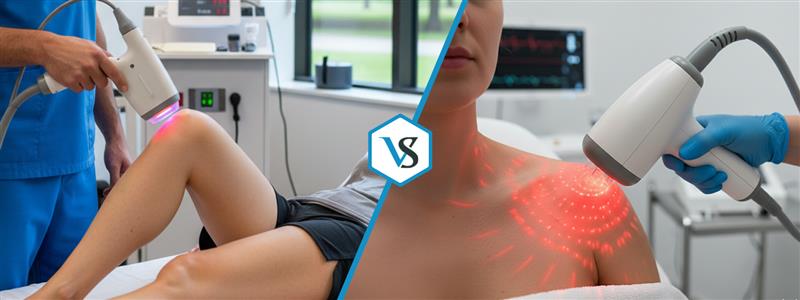
Cold Laser vs. Red Light Therapy | What’s The Difference?
Are you tired of popping pills for your persistent pain and skin conditions? Then it’s high time you start looking for non-invasive treatment options. With the incorporation of modern technologies in the wellness industry, light therapies are popular for their healing and pain-relief benefits.
The two common light therapies are cold laser therapy and red light therapy.
Indeed, these two therapies help with chronic joint pain and skin issues, but they differ in key ways. Often, without understanding the differences, people undergo the wrong therapy, which becomes a waste of time. Also, the discomfort persists.
To reap the benefits, it is vital to understand the differences between cold laser therapy and red light therapy.
While red light therapy helps with surface-level healing, cold laser therapy penetrates deeper into the skin to stimulate cellular regeneration.
For mild pain or discomfort, red light therapy can be effective. But if a person is experiencing pain from injuries, it requires long-term healing. And cold therapy is the most effective treatment plan for that.
In addition, cold laser and red light therapy play a crucial role in treating skin concerns. These include premature aging, wrinkles, and fine lines.
Typically, depending on individual concern, you can choose between the two therapy options. As you embark on your fitness and recovery journey, it is essential to choose the right light therapy.
From this blog, you will get an understanding of cold laser and red light therapy. Furthermore, the blog will discuss the benefits and disadvantages of both therapies so that you can make an informed decision.
Let’s dive into the realm of light therapies!
What is Cold Laser Therapy and Who Needs It?
Cold laser therapy is a useful laser light treatment for pain. The therapy combines low-intensity light, known as cold laser.
Professional physiotherapists and chiropractors use cold laser technology to help patients recover from injury or inflammation. Fitness enthusiasts or active sports participants may experience muscle strain.
The use of low-intensity light in cold laser therapy improves blood circulation. As it helps blood to flow properly through the skin tissues, it reduces signs of inflammation.
Additionally, when low-intensity light penetrates the skin, it triggers chemical changes. It stimulates mitochondria, leading to the production of large amounts of adenosine triphosphate (ATP).
Increased ATP production in the body contributes to rapid healing from injuries and relief from chronic pain. Moreover, it helps people who experience conditions like:
- Ligament sprain
- Muscle strains
- Arthritis
- Tendonitis
- Frozen shoulder
- Fibromyalgia pain
- Soft tissue injuries
What is Red Light Therapy and Who Needs It?
After cold laser therapy, another well-known light therapy worth your attention is red light therapy. It is a technology that helps tissues, including muscle, skin, and other parts of your body, heal.
The therapy uses low levels of red light to target your cells and skin tissues. Like cold laser therapy, red light therapy also increases ATP production in the body. As a result, it improves cell function and repair.
There are different types of devices for red light therapy. All these devices use the power of light-emitting diodes (LEDs) that penetrate deep into the cells, relieving mild pain and treating skin conditions, including wrinkles. The different red light therapy devices include masks, wands, panels, and beds.
People rely on red light therapy when they experience conditions like:
- Acne
- Wrinkles and other premature aging
- Muscle soreness
- Inflammation
- Mild wounds
Pros and Cons of Cold Laser Therapy
Indeed, cold laser therapy has numerous benefits. Its role in cell regeneration and pain reduction can support your recovery.
However, even with so many advantages of cold laser therapy, you can see several shortcomings. To ensure safety, it is essential to understand the advantages and disadvantages of cold laser therapy.
Pros:
- Non-invasive and painless: One of the significant advantages of cold laser therapy is that it is non-invasive and painless. The treatment doesn’t require any needle entry points through the skin. In most cases, people don’t feel pain. Rather, they experience a soothing sensation.
- Convenient and quick: People looking for light therapy sessions that align with their busy schedules can opt for cold laser therapy. The session typically lasts for 5 to 20 minutes. Depending on the condition, the session duration is determined.
- Accelerates healing process: Cold laser therapy works on a cellular level. It results in faster tissue regeneration. Since it works faster on cells, it provides quicker recovery times from injuries and chronic conditions.
- Reduces pain and inflammation: One of the core benefits of cold laser therapy is its ability to penetrate deep into tissues, improving blood circulation. As a result, the therapy reduces inflammation, resulting in less pain in the target areas.
- Helps with skin rejuvenation: The low-intensity light technology of the cold laser therapy boosts collagen production. As a result, it increases skin elasticity, which helps reduce wrinkles and fine lines.
- Drug-free treatment option: People who want to recover from persistent pain and premature aging without any medication can seek a cold laser therapy option.
Cons:
- Multiple therapy sessions: Cold laser therapy sessions take a short span of time. But if your condition is severe, it may require more sessions to achieve positive results.
- Can cause skin irritation: Some people may be sensitive to the light technology used in the therapy. For this reason, one side effect of cold laser therapy is skin irritation. In the first few sessions, if you experience redness or discoloration, you may contact a doctor to discuss alternative treatments.
- May lead to eye injury: Since the therapy uses a laser, direct exposure can cause permanent eye damage. In such scenarios, people need to wear proper eyewear.
- Expensive treatment: Though invasive in nature, cold laser therapy can be a costly treatment option. It can drain your pockets, especially if you don’t have insurance coverage.
Pros and Cons of Red Light Therapy
Like cold laser therapy, red light therapy, or red light laser treatment, it also packs several advantages. The low levels of red light in the therapeutic process reduce signs of aging. Additionally, the light penetrates the skin tissue, allowing it to heal from mild pain and discomfort.
Despite these benefits, red light therapy has several disadvantages. We will explore both sides to ensure you can make the right choice.
Pros:
- Red light therapy boosts blood circulation throughout the body. As a result, it facilitates the supply of oxygen and nutrients to the skin, making it look even and bright.
- Improving skin elasticity is another benefit of red light therapy. Consistent sessions will stimulate collagen production, reducing signs of premature aging. That includes fine lines and wrinkles.
- The low levels of red light are gentle on the skin and don’t irritate. It thus offers the advantages of red light therapy to people with sensitive skin. Using a red light therapy mask can help reduce acne, redness, and inflammation.
- Beyond skincare, red light therapy can help relieve body pain from physical activities. The treatment induces cellular regeneration, thereby repairing damaged tissue. Overall, it helps in reducing muscle soreness.
- Since the therapy induces blood circulation and cellular activity, it also benefits hair growth. The red light penetrates the skin, stimulating hair follicles to become thicker and fuller.
Cons:
- While the therapy is safe, prolonged sessions can have certain side effects. People with sensitive skin may experience skin irritation after long red light therapy sessions. Though the concern goes away in a few hours, it is essential to start with short sessions.
- Eye discomfort is a side effect of red light therapy. It happens when you’re exposed to direct light. Most therapy devices use red light for control. However, it is essential to use protective goggles or keep the eyes shut, especially when using the masks.
- It is rare, but some people experience headaches after the therapy sessions. It happens either due to prolonged exposure to light or the user’s low tolerance. Whatever the reason is, if you experience it, try to shorten the sessions.
- Red light therapy penetrates deeply into the skin and brings impurities to the surface. Such an action may cause breakouts in the initial sessions. Once your skin adjusts to the therapy, the effects subside.
Is red light therapy the same as laser therapy?
The use of light therapies is gaining popularity in the wellness sector. Most people want relief from pain and skin conditions without invasive procedures. That’s why cold laser therapy and red laser therapy have emerged.
As both are forms of light therapies, people use these terms interchangeably. However, it is not the case. The sources of light for cold laser and red light therapies are different. Also, the difference lies in their applications.
To better understand them, let’s compare cold laser therapy and red light therapy. The comparison will cover factors such as light sources, treatment approaches, and depths to provide an overall understanding of the therapies.
Light Sources: Coherent vs. Non-coherent
Cold laser therapy uses coherent light sources. It means that light waves travel in perfect synchronization. With such high uniformity, the therapy penetrates deeper into tissues, leading to less scattering.
Red light therapy, on the other hand, uses non-coherent LED light. The lights don’t travel in synchrony, resulting in greater diffusion as they pass through the tissues.
Penetration Depths and Effects on Tissues
The cold laser therapy vs. red light therapy comparison depends on how deeply they can reach. The penetration depth of a cold laser can reach up to 5 centimeters. Though it is a standard, certain wavelengths and power settings can have greater penetration depth.
Such depth makes the therapy effective for:
- Internal scar tissue.
- Boost tissue repair and reduce inflammation.
- Deep muscle injuries.
- Spinal disc issues.
- Deep joint problems.
In red light therapy, the penetration depth is relatively shallow. It typically reaches 2-3 centimeters below the skin surface. With such penetration depth, the therapy becomes effective for:
- Surface wound healing
- Accelerating collagen production and skin rejuvenation.
- Reducing inflammation in tissues near the skin surface.
- Superficial joint pain.
Applications of Cold Laser Therapy and Red Light Therapy
Another point of difference between cold laser and red light therapy lies in their applications. While the coherent light of a cold laser targets specific areas, the broad-spectrum red light therapy diffuses.
Since both light therapies have significant benefits for healing and recovery, let’s understand their applications in these areas.
Pain Management
When it comes to cold laser therapy for pain, it uses low-intensity light to penetrate deep inside the tissue. The light travels to particular areas where you experience pain, which can be chronic or result from any injury.
Red light therapy diffuses the light that travels through the tissue. As a result, it covers a broad area and doesn’t cater to precision targeting. Therefore, the therapy helps relieve pain closer to the skin.
Wrinkles and other signs of premature aging
Using cold laser therapy for wrinkles is deeper and precise. Low-intensity light technology stimulates ATP production and cellular regeneration. It thus increases skin elasticity and reduces wrinkles and fine lines.
Red light therapy is also beneficial for improving skin health. With the non-coherent light, the therapy accelerates collagen production. It thus reduces wrinkles, making the skin look younger and more even. However, its impact on the skin is more surface-level.
Treatment Frequency
The deep-penetrating nature of cold laser therapy makes it less frequent. Usually, people can go for a session 1-3 times per week, depending on their condition.
Red light therapy, on the other hand, may require frequent sessions. Typically, a person can seek treatment 2-5 times per week, depending on the severity of their condition. The superficial nature of red light therapy makes it more frequent than cold laser therapy.
Get Effective Light Therapy from Action Chiropractic and Sports Injury Center
With the cold laser vs. red light therapy comparison, you can now choose the ideal one for your recovery journey.
While cold laser therapy has deep penetration, red light therapy works at a superficial level. For people suffering from chronic pain and deeper skin issues like wrinkles and fine lines, cold laser therapy can be an ideal choice.
But if you are looking for a non-invasive treatment that would heal you from surface-level pain and skin discomfort, red light therapy is a better alternative.
Depending on the severity of your condition and prompt healing, you can seek professional advice before starting therapy.
People seeking non-invasive treatment options for deep tissue repair can consider cold laser therapy.
At Action Chiropractic and Sports Injury Center, our professionals combine cold laser therapy in Naperville and chiropractic techniques to get people in shape. Through proper assessment, we first identify the target areas and perform the therapy.
Our expert professionals use robust technology to deliver therapy in a safe, secure environment. From sports-related injuries to severe muscle sprains, we are committed to providing relief from all of it.
Check out our therapeutic practices and ensure to stay fit and healthy.
