
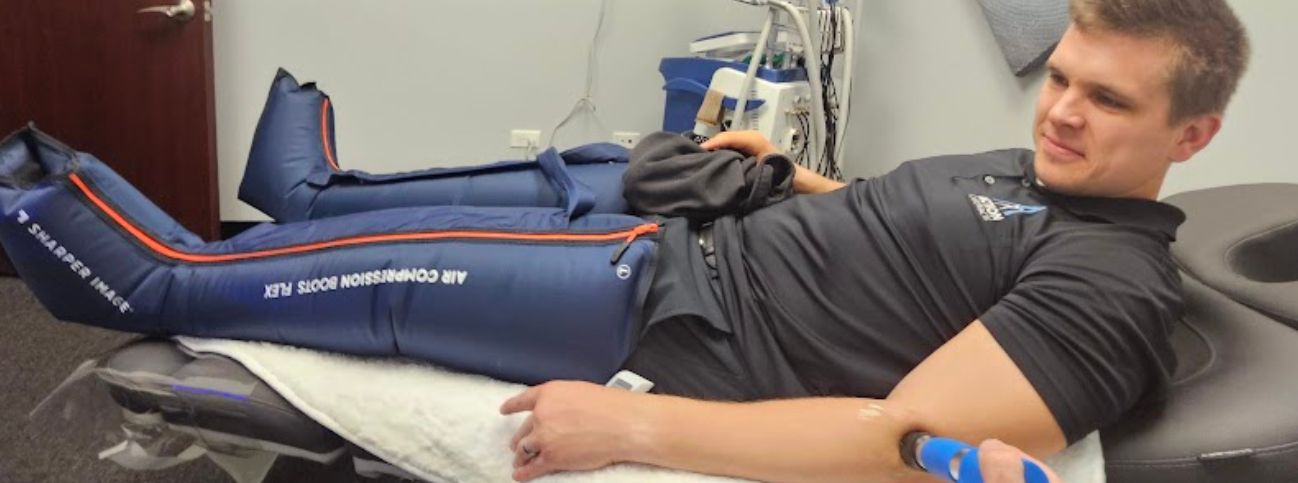
How Is Shockwave Therapy Used in Chiropractic Care?
Table of Contents
Musculoskeletal pain has a way of quietly taking over your daily life. One morning, you may face a sore heel that makes you wince with every step. A stiff shoulder might also keep you from reaching the top shelf. Months pass, and the usual treatments barely move the needle.
Millions of people deal with exactly this kind of stubborn, chronic pain that refuses to respond to basic care. Conventional approaches, including ice packs, painkillers, or repeated cortisone injections, offer short-term relief. However, they don’t fix the underlying problem.
What to do when the standard playbook simply stops working? That’s precisely where Shockwave Therapy steps into the conversation as a credible, non-invasive answer. Professional chiropractors have begun integrating this technology into their treatment plans as an alternative. It reaches deeper into injured tissue than surface-level treatments ever could.
It’s time to stop settling for temporary fixes and start reclaiming your body’s natural healing potential.
If you’re looking for how Shockwave therapy functions, you have arrived at the right place. This blog walks through how the therapy works, what it treats, who benefits most, and what you should realistically expect. By the time you finish reading, you will have a complete, honest picture of this treatment.
Stay tuned!
What Is Shockwave Therapy?
Shockwave Therapy is also clinically termed as Extracorporeal Shock Wave Therapy (ESWT). It uses high-energy acoustic pressure waves to treat damaged musculoskeletal tissue. A handheld device transmits these waves through your skin and into the injured area.
The waves create a controlled mechanical stimulus at the tissue level. This stimulus triggers the body’s natural repair process in a way that passive treatments simply cannot replicate.
There are 2 primary types used in clinical settings:
· Radial shockwave therapy: It disperses energy over a broader area, making it ideal for surface-level soft tissue issues.
· Focused shockwave therapy: It concentrates energy at a precise depth, targeting more serious structural damage with greater accuracy.
At the cellular level, the acoustic waves stimulate fibroblast activity, which directly drives collagen synthesis. They also disrupt calcified deposits, break down scar tissue adhesions, and promote localized neovascularization.
The result is: New blood vessel formation!
That increased blood flow delivers oxygen and nutrients the injured tissue desperately needs. As a result, your body undergoes genuine tissue repair, not just temporary pain suppression.
How Does Shockwave Therapy Work in Chiropractic Care?
Chiropractors select between these two based on your specific diagnosis and tissue depth.
Chiropractic care has always focused on the relationship between musculoskeletal structure and overall function. Shockwave Therapy fits naturally into that philosophy. A chiropractor uses it as a targeted tool within a broader, individualized treatment plan. It does not replace spinal adjustments or rehabilitative exercise. Rather, it enhances them.
During a session, the chiropractor applies a coupling gel to your skin over the target area. The handheld applicator then delivers rapid acoustic pulses at a calibrated frequency and intensity. This entire process takes between five and twenty minutes, depending on the area being treated. Most patients describe the sensation as a deep, rhythmic thumping – occasionally intense but entirely tolerable.
Chiropractic shockwave therapy works through two interconnected mechanisms. The first is Hyperstimulation analgesia. Here, the acoustic pulses overwhelm pain receptors, temporarily reducing pain signals sent to the brain.
The second is the regenerative response. It’s a controlled microtrauma stimulating the body to restart healing in tissues that stalled in a chronic inflammatory state. Many musculoskeletal injuries plateau in recovery because the tissue transitions out of the acute healing phase without fully repairing. Shockwave essentially resets that cycle.
When paired with spinal manipulation, soft tissue mobilization, and corrective exercises, you can see compounded results. The chiropractor addresses structural alignment while the acoustic therapy supports tissue-level repair simultaneously.
Such an integrated approach is what makes shock therapy chiropractor sessions different from receiving the treatment in isolation.
How Does Shockwave Therapy Work in What Conditions Does Shockwave Therapy Treat in Chiropractic?
Practitioners use targeted chiropractic shockwave therapy across a wide range of musculoskeletal conditions. It involves tendons, fascia, and chronic soft tissue dysfunction. The therapy works best for conditions where conventional treatments have delivered incomplete or temporary results.
Below are the most common conditions for which you can get shockwave therapy:
Plantar Fasciitis
Heel pain that makes your first steps of the day feel unbearable is a hallmark of plantar fasciitis. Acoustic waves break down chronic inflammation in the fascial band and stimulate collagen repair.
Several studies have consistently shown significant pain reduction after 3 to 5 sessions of shockwave chiropractic treatment.
Calcific Shoulder Tendinitis
Chiropractic approaches for shoulder pain usually involve non-invasive approaches that restore alignment, reduce tension, and improve mobility. Calcium deposits in the rotator cuff tendons cause significant shoulder pain and restrict overhead movement. Shockwave energy mechanically fragments these calcium deposits and accelerates their natural reabsorption.
You may typically notice a meaningful improvement in range of motion within weeks of starting treatment.
Tennis Elbow (Lateral Epicondylitis)
Repetitive strain on the forearm tendons leads to lateral epicondylitis, which is notoriously slow to heal on its own. Shockwave therapy promotes tendon cell regeneration at the epicondyle attachment point. If you’re someone who has been struggling with this condition for months, you’ll experience measurable relief after targeted treatment.
Achilles Tendinopathy
The Achilles tendon takes enormous daily stress, and chronic tendinopathy can sideline an active person for months.
Focused shockwaves reach deep tendon tissue and restore cellular activity in degenerated fibers. This condition responds particularly well to the regenerative properties of acoustic wave treatment.
Chronic Lower Back Pain
Muscle trigger points and myofascial tightness contribute significantly to chronic lower back pain. A trained chiropractor or any chiropractic practice integrating shockwave therapy can target these points with precision.
The treatment disperses adhesions and reduces localized muscle hypertonicity that fuels persistent pain cycles.
Hip Bursitis
Inflammation of the trochanteric bursa causes sharp lateral hip pain that worsens with walking or lying on the affected side. Shockwave therapy can significantly reduce bursitis-related inflammation without needles or steroids.
It offers a clean, drug-free path toward reduced pain and restored hip mobility.
What Are the Benefits of Shockwave Therapy?
Shockwave treatment offers distinct advantages, particularly for patients with conditions that have resisted other treatments.
Here’s a focused look at 5 core benefits that make this therapy worth considering seriously.
1. Non-Invasive with No Surgical Risk
No incisions, no needles, and no anesthesia – the treatment sits entirely outside the body. This alone makes it a compelling option for patients who are not surgical candidates. You receive effective treatment without the recovery burden that comes with any invasive procedure.
2. Stimulates the Body's Own Healing Response
Acoustic waves trigger biological repair, including fibroblast activation, new collagen production, and increased local blood circulation. It’s not just a surface-level symptom relief.
The therapy initiates actual tissue regeneration in areas where your body’s natural healing has stalled.
3. Short Treatment Sessions
Most sessions last 5 to 20 minutes, making them easy to fit into a working week. There is no lengthy hospital stay, no pre-procedure preparation, and no post-treatment monitoring period. You walk in, receive the treatment, and walk out the same day.
4. Minimal to No Downtime
Most patients return to light daily activities immediately after a session. Unlike surgical interventions or invasive injections, there is no mandatory rest period. A few patients experience mild soreness in the treated area for one to two days, which is a normal part of the healing response.
5. Effective for Chronic, Treatment-Resistant Conditions
Some individuals arrive after months, sometimes years, of trying physical therapy, medications, and injections with limited success. Shockwave therapy reaches tissue at a mechanobiological level that passive treatments cannot access.
For chronic tendinopathies and fascial conditions, it often delivers results that nothing else has managed to achieve.
Who Is a Good Candidate for Shockwave Therapy?
Not every client is an automatic fit for this treatment, though it effectively serves a broad population. A qualified chiropractor or elsewhere will evaluate your history, imaging, and response to prior treatments before recommending it.
If your condition belongs to any of the following categories, you’re eligible to receive this treatment:
People with Chronic Tendon Conditions
People dealing with tendinopathy for three months or longer are strong candidates. When the tendon has moved into a degenerative rather than acutely inflamed state, conventional treatments lose effectiveness fast.
Shockwave therapy specifically targets that degenerative tissue environment and reactivates the repair cascade.
Active Individuals with Overuse Injuries
Athletes, runners, and physically active people develop overuse injuries that accumulate over time in tendons and fascial structures. These injuries often resist standard rest-and-recover protocols.
Shockwave therapy accelerates tissue repair while allowing the patient to maintain some activity during recovery.
Patients Who Have Not Responded to Conservative Care
If physical therapy, NSAIDs, and corticosteroid injections have not produced lasting relief, shockwave therapy becomes a strong next step before considering surgery. It fills a critical gap in the treatment ladder for musculoskeletal conditions.
You can easily avoid surgery entirely after completing a shockwave treatment course.
Patients Seeking Drug-Free Pain Management
Growing numbers of patients actively avoid long-term medication use for pain management. Shockwave treatment delivers measurable pain reduction through biological mechanisms rather than pharmacological ones.
It’s a strong option for those prioritizing a clean, non-pharmaceutical approach to recovery.
Older Adults with Degenerative Soft Tissue Conditions
Aging tendons lose elasticity and healing capacity over time. It makes conditions like plantar fasciitis and rotator cuff tendinopathy especially stubborn in older populations. Shockwave therapy stimulates cellular activity even in aged, low-metabolism tissue.
Older adults often respond surprisingly well to this treatment when other therapies have plateaued.
Who Should Avoid Shockwave Therapy?
Any form of chiropractic care is safe for all ages when performed by the right expert. While the present treatment benefits a wide range of patients, certain medical conditions make it unsuitable. Sometimes, you may also require a careful medical review before proceeding.
Your chiropractor will screen for these during the initial consultation.
Blood Clotting Disorders or Anticoagulant Therapy
If you’re on blood thinners or dealing with clotting disorders, there’s a higher risk of tissue bleeding from the acoustic pressure waves. The mechanical energy can disrupt fragile or anticoagulated vascular tissue. Prior clearance from a primary care physician is required before treatment begins.
Implanted Devices Near the Treatment Site
Pacemakers, bone stimulators, or other implanted electronic devices in or near the target area create a serious contraindication. The acoustic waves may interfere with device function or damage surrounding tissue. Treatment zones must be well clear of any implanted hardware.
Active Infection or Open Wounds at the Site
Introducing acoustic pressure into infected tissue or into the vicinity of an open wound carries a real risk of spreading infection. There also might be a delayed or complicated wound closure. The treatment area must be intact and free of active infection.
Any skin compromise in the target region disqualifies that area from treatment.
Pregnancy
During pregnancy, shockwave therapy is contraindicated as a precautionary measure. There are currently insufficient studies on the effects of acoustic waves on fetal tissues. It’s advisable for pregnant women to wait until after delivery before considering this treatment.
Malignancy in the Treatment Region
Any known or suspected cancer in the area targeted for treatment is a firm contraindication. Acoustic energy could, in theory, stimulate cellular activity in malignant tissue. You ought to have an oncology clearance if you’re carrying a history of cancer near a potential treatment zone.
Shockwave Therapy vs. Other Chiropractic Treatments: How Does It Compare?
Shockwave therapy occupies a specific and valuable niche within the broader chiropractic toolset. Comparing it honestly with other commonly used treatments helps clarify when and why a chiropractor might recommend it.
Shockwave Therapy vs. Ultrasound Therapy
For decades, Therapeutic ultrasound has been a chiropractic staple, using low-intensity sound waves to warm tissue and reduce inflammation. It works well for mild, acute soft tissue injuries. The shockwave process operates at a much higher energy level.
It reaches deeper into tissue and triggers actual cellular regeneration rather than surface warming. For chronic or degenerative conditions, the therapy consistently delivers more durable outcomes than therapeutic ultrasound.
Shockwave Therapy vs. Spinal Manipulation
Spinal manipulation corrects joint dysfunction and restores proper biomechanical movement through the spine and extremities. It’s highly effective for joint-based pain and restriction. Acoustic wave therapy, in contrast, targets soft tissue, including tendons, fascia, and muscle trigger points, at a cellular level.
These two therapies address different tissue types, which is precisely why many chiropractors combine them. Used together, they provide a comprehensive picture of the structural and soft-tissue anatomy.
Shockwave Therapy vs. Dry Needling
Dry needling involves inserting thin needles into muscle trigger points to release tension and improve local circulation. It is effective for myofascial pain and produces good results for many patients. Shockwave therapy achieves comparable or superior results for tendinopathies and fascial conditions without any skin penetration.
Do you have needle aversion or conditions centered on tendon degeneration? Well, a professional shockwave chiropractic treatment offers distinct advantages in both comfort and tissue specificity.
What to Expect at Your First Shockwave Therapy Appointment?
Walking into your first shockwave therapy session with clear expectations makes the experience far less intimidating. The process is straightforward, and most individuals are surprised by how quickly it moves. We’ve detailed below a section-by-section breakdown of what actually happens:
1. Consultation and Assessment
Your chiropractor begins with a thorough review of your medical history, current symptoms, and prior treatment outcomes. Imaging results, if available, are reviewed to confirm the diagnosis and identify the precise treatment target.
The step ensures the therapy is appropriate for your specific condition and rules out any contraindications before treatment begins.
2. Identifying the Treatment Area
The chiropractor uses physical palpation and, in some cases, diagnostic ultrasound to pinpoint the exact tissue location needing treatment. Precise targeting is crucial with shockwave therapy, as the acoustic energy must reach the correct anatomical structure.
Such a localization step takes only a few minutes but directly determines how effective the session will be.
3. The Session Itself
The practitioner then applies a numbing gel over the target area to ensure clean wave transmission. The applicator is pressed against the skin and delivers rapid pulses for five to twenty minutes. The duration depends on the condition and the treatment zone.
The sensation feels like a firm, rhythmic tapping or pressure. The majority of the patients tolerate it comfortably, though intensity is adjusted based on feedback.
4. Post-Session Care Tips
Mild soreness or achiness in the treated area for 1 to 2 days is normal and indicates that the biological response is active. Avoid anti-inflammatory medications, such as ibuprofen, immediately after treatment. It’s because they can blunt the healing response that the therapy just triggered.
We encourage light movement after the session. However, you should strictly avoid strenuous activity involving the treated area for 24 to 48 hours.
5. Follow-Up Schedule
Most treatment protocols involve 3 to 6 sessions spaced 5 to 7 days apart. Your chiropractor will monitor your response after each session and adjust intensity or frequency accordingly.
Significant improvement is often noticeable after the 2nd or 3rd session. Expect continued progress over the weeks following the final treatment.
Ready to Move Beyond the Pain? Here's What Comes Next
Shockwave therapy isn’t a trend nowadays. It’s a well-researched and clinically supported treatment that fills a real gap for patients stuck in chronic pain cycles. The procedure works at a tissue level that most passive treatments simply cannot reach.
Combined with the right care, it addresses both the structural and soft-tissue dimensions of musculoskeletal pain in a coordinated plan. The right treatment at the right stage of care makes all the difference.
At Action Chiropractic and Sports Injury Center, we believe every patient deserves access to treatments that actually move the needle. Our team is committed to connecting patients with evidence-based care that addresses root causes. If you are living with stubborn musculoskeletal pain and want to understand whether shockwave therapy is right for your situation, we’re here to guide that conversation.
Reach out to our team today and take the first step toward a recovery plan built around your specific needs.
